-
Shaun Bythell – The Diary of a Bookseller
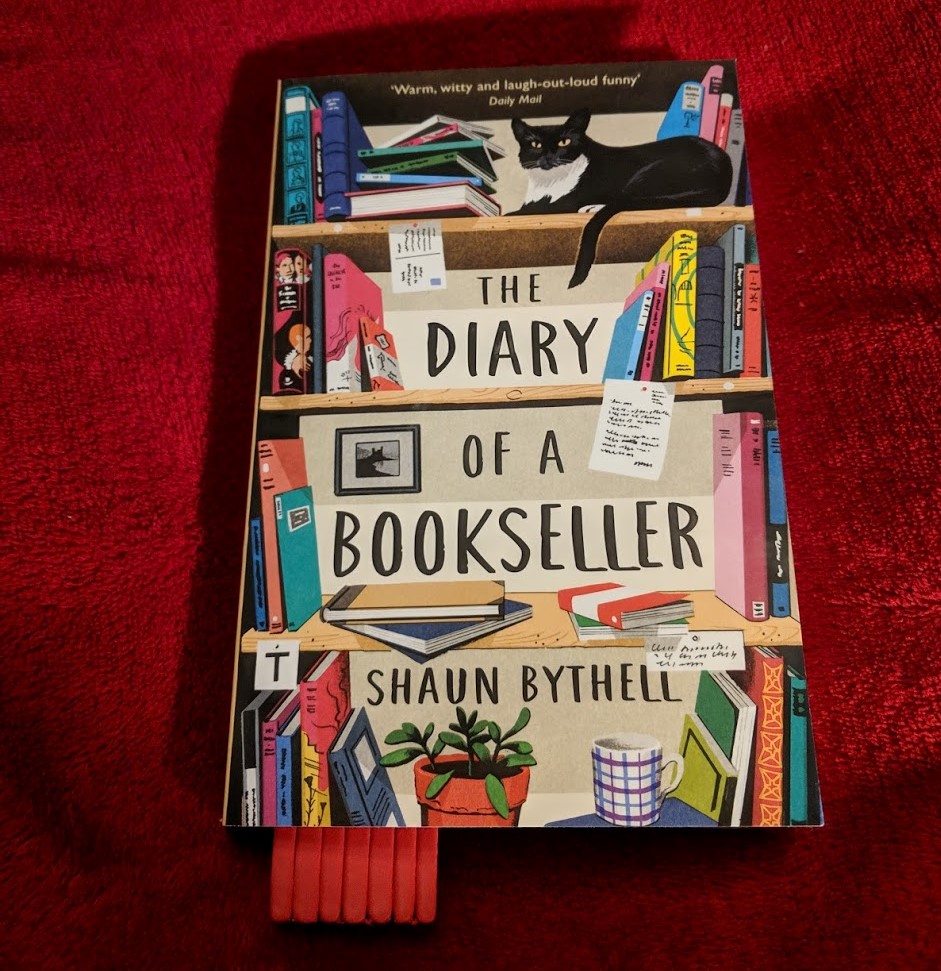
First book of the year and my dreams have been destroyed. Just kidding, kinda. I always had a dream that I’d open a bookshop, but I’d always imagined it as a dream to be surrounded by books and book-loving people.
I’d never really considered the customers though, and after reading Shaun’s diary, I’m not sure it’s such a dream anymore.
This book is the diary of the owner of The Book Shop in Wigtown (Galloway in Scotland), and he’s not backwards in coming forwards – it’s a very honest diary. From his coworkers to customers, no-one escapes from Shaun’s witty but acerbic sense of humour.
I’d also never realised how much driving around the country is involved in owning a second hand bookshop – Shaun’s diary also details the places he goes to look at books that people want to sell to him – let’s just say that some people really overestimate what their books may be worth.
Other things that this book opened my eyes to include how badly Amazon treats second-hand book sellers. I guess I should really have known, but I never really thought about it. It’s so convenient to just buy that book from Amazon that it never really occurred to me what effect it would be having on other people’s livelihoods.
It’s a shame that there’s no second-hand bookshops near where I live, but from now on I’ll definitely be making more of an effort to seek them out when I’m on my travels, and The Book Shop is now at the top of my list.
Apart from the fact that my dreams have been lightly crushed, this book was warm and funny and a really interesting insight into the life of a bookshop. Great book for my first of 2019.
320 pages. Published in: 2018Read in Paperbackon 1st-2nd January 2019 -
The One Hour Bible
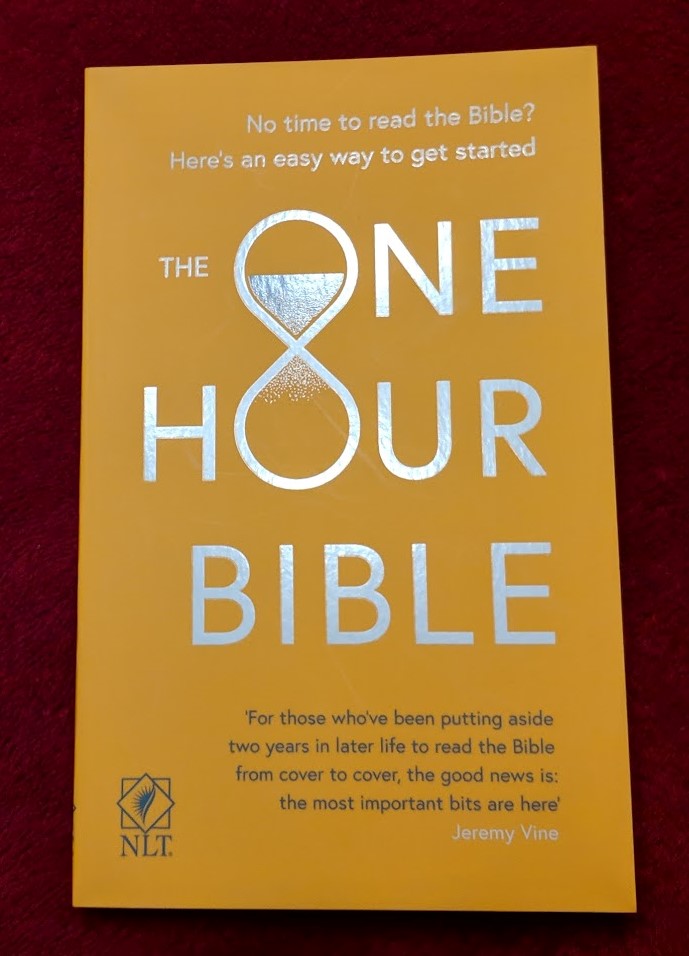
I can’t really review this book in the same way as I would usually, for one simple reason. Unlike some other ‘read the Bible’ books where the content is rewritten to make it fit into an hour, this was the actual words of the Bible – selected passages to give you the general overview of the Bible story in just about an hour (I think it actually took me slightly longer than an hour to read, but thereabouts).
I really appreciated the fact that it wasn’t rewritten, the words of the Bible have so much power, and even though this was massively abridged, it was a really great introduction for beginners to see what the story is. My husband bought this book at Durham Cathedral, and I really hope it will be good for him to see what it’s all about – I’m hoping (and I guess the publishers are too) that this will be an enticing peek that will make people want to pick up the actual Bible.
That’s where The One Hour Bible comes in. Whatever your present level of acquaintance with the Bible, this little book will enable you to stand back and view the epic sweep of the Bible’s entire narrative arc – from the majestic opening of the book of Genesis to the final stirring words of Revelation
The One Hour BibleThis quote from the introduction really summed it up for me – it’s really easy when reading the Bible to be focused on particular parts or themes, and the ability to take in the whole arc of the Bible in around an hour was great for putting it back into context.
I’d highly recommend this for anyone, no matter newbie or experienced, if you just want to know what’s going on, or if you just want a step back. I’m thinking that this would be great for using with our youth group too – we could read through the whole Bible in just a few sessions.
-
Salley Vickers – The Librarian
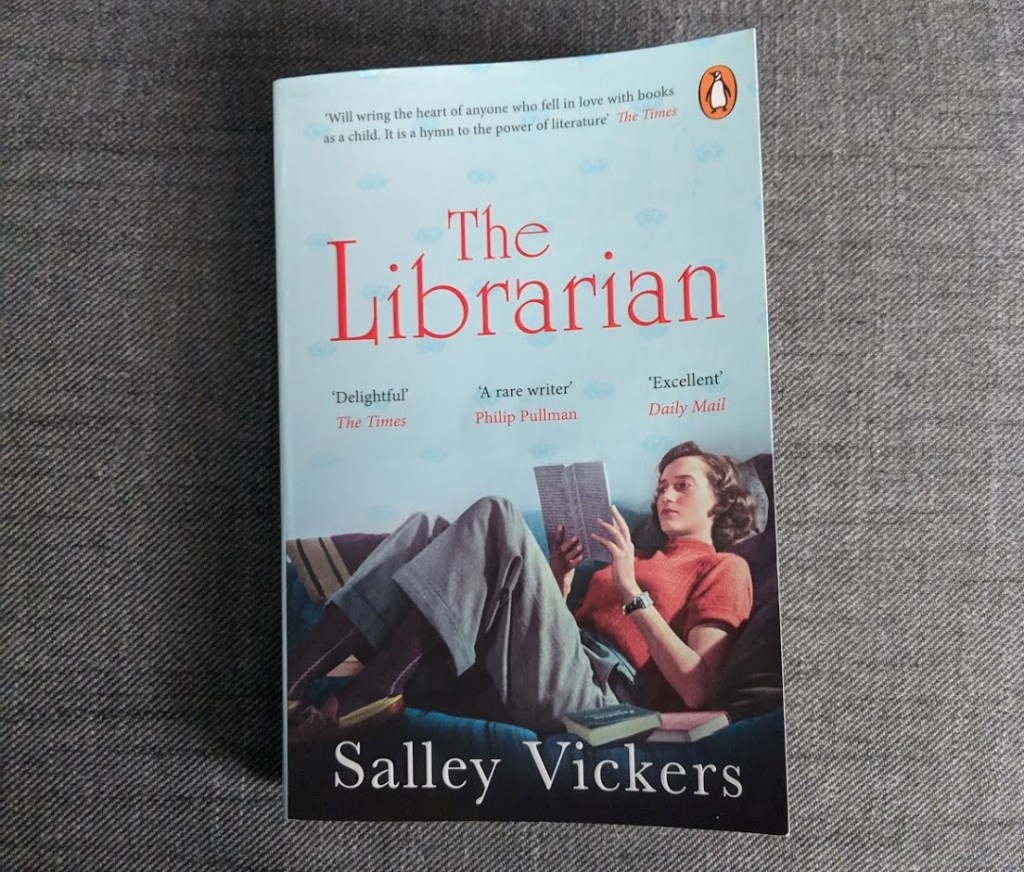
As an avid reader, it’s probably no surprise that I mainly picked this book due to the title and the front cover – I know, I know, judging a book by it’s cover and all that. But a book which is probably going to be mainly about books, how could I resist?
Having finished the book, I have mixed feelings. Once I sat down to properly read it, I finished most of it in one sitting. I found the setting and the characters enticing and I was truly wrapped up in their lives.
Sylvia is newly graduated from library school when she finds herself in a children’s library in a small village. You can tell that she has passion for books and for trying to get children interested in reading (something that seems to have fallen out of fashion nowadays). Through the book, we meet a whole host of young characters on whom Sylvia has a great influence.
You could really tell that the author was sharing parts of her childhood in this story, you could feel her passion for the library and the children’s section in particular really shining from the pages.
But certain things really bugged me. Like Sylvia’s relationship with Hugh Bell. I’m personally not sure whether I even liked it in the book at all, but since it was there, I’d have preferred it to be more fleshed out. It felt like a little bit of a cop-out on the romance side.
The thing that bugged me the most though (like Harry Potter and the Deathly Hallows) was the extra chapter at the end where all the children are grown up. It felt like it was added in as a way to just tie up all the loose ends of the story and let you know what happened to all the children, but personally I would have preferred it with a bit of mystery – I liked being unsure about a few things and dreaming for myself what became of the children. It just felt a bit too ‘easy’, and since the main of the story was about how imperfect life can be, the ending was just too perfect for me.
Even with the annoyances I felt though, I’ll still give 3 stars out of 5. I think my annoyances were personal rather than general, but I was still lost in the story and lost in the characters and the time and the books. And I loved this quote which I think sums up the book for me:
Only fools disregard children’s literature. Clarity of vision is shed with childhood but one can sometimes recover a glimpse of it in the best children’s literature.
Salley Vickers385 pages. Published in: 2018Read in Paperbackon 19th-31st December 2018 -
Susan Cain – Quiet
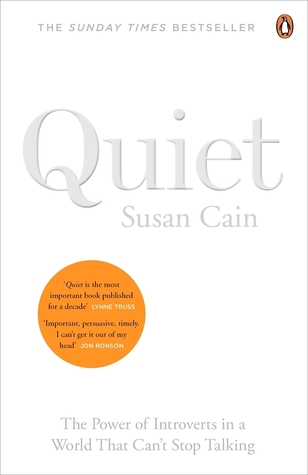
Why did I want to read this book? I’ve always thought of myself as an introvert, and actually (although it was probably pretty obvious), this book confirmed it. I thought that perhaps this book would contain ideas for coping with being an introvert at work, and it definitely did. Backed by plenty of research, the author gives some great tips for how to make sure that you’re not walked over by extroverted people.
Why shouldn’t quiet be strong? And what else can quiet do that we don’t give it credit for?
Susan CainI found that fascinating, and the fact that there were so many scientific studies to back up the ideas was great.
I did, however, feel like the book was very heavily biased towards introverted people. There were many times where it felt like the idea that introverted people are clever and extroverted people are popular was being pushed down your throat. And although the author did make reference to the fact that not all introverts/extroverts conform to the stereotypes, if I read this book as an extrovert I may find issue with it.
As an introvert though, it did feel good to have some of my feelings/tendencies validated. The fact that I seem to run out of energy after spending too much time being ‘social’ and need to go home and spend time alone – I always thought that was weird, but apparently it’s common among introverted people. Susan says that “Introverts recharge their batteries by being alone; extroverts need to recharge when they don’t socialize enough”.
Interesting for me (and unexpected) – there was a section on being introverted in a Church setting. There have always been certain things that intimidate me as church tends to be an overtly social setting – just walking through the door for the first time was terrifying.
There’s a place in God’s kingdom for sensitive, reflective types. It’s not easy to claim, but it’s there.
Susan CainI try my best to hide my introverted side while I’m at church – diving into volunteering situations definitely helps, but it was fascinating to hear someone else voice the same things I have felt.
“Everything in the service involved communication,” he says with gentle exasperation. “Greeting people, the lengthy sermon, the singing. There was no emphasis on quiet, liturgy, ritual, things that give you space for contemplation.
Susan CainI’ve highlighted way too many quotes on my kindle to share here, but I’ll finish with this last one:
Love is essential; gregariousness is optional. Cherish your nearest and dearest. Work with colleagues you like and respect. Scan new acquaintances for those who might fall into the former categories or whose company you enjoy for its own sake. And don’t worry about socializing with everyone else. Relationships make everyone happier, introverts included, but think quality over quantity.
Susan Cain325 pages. Published in: 2012Read in E-bookon 26th November – 30th December 2018 -
Jane Austen – The Beautifull Cassandra
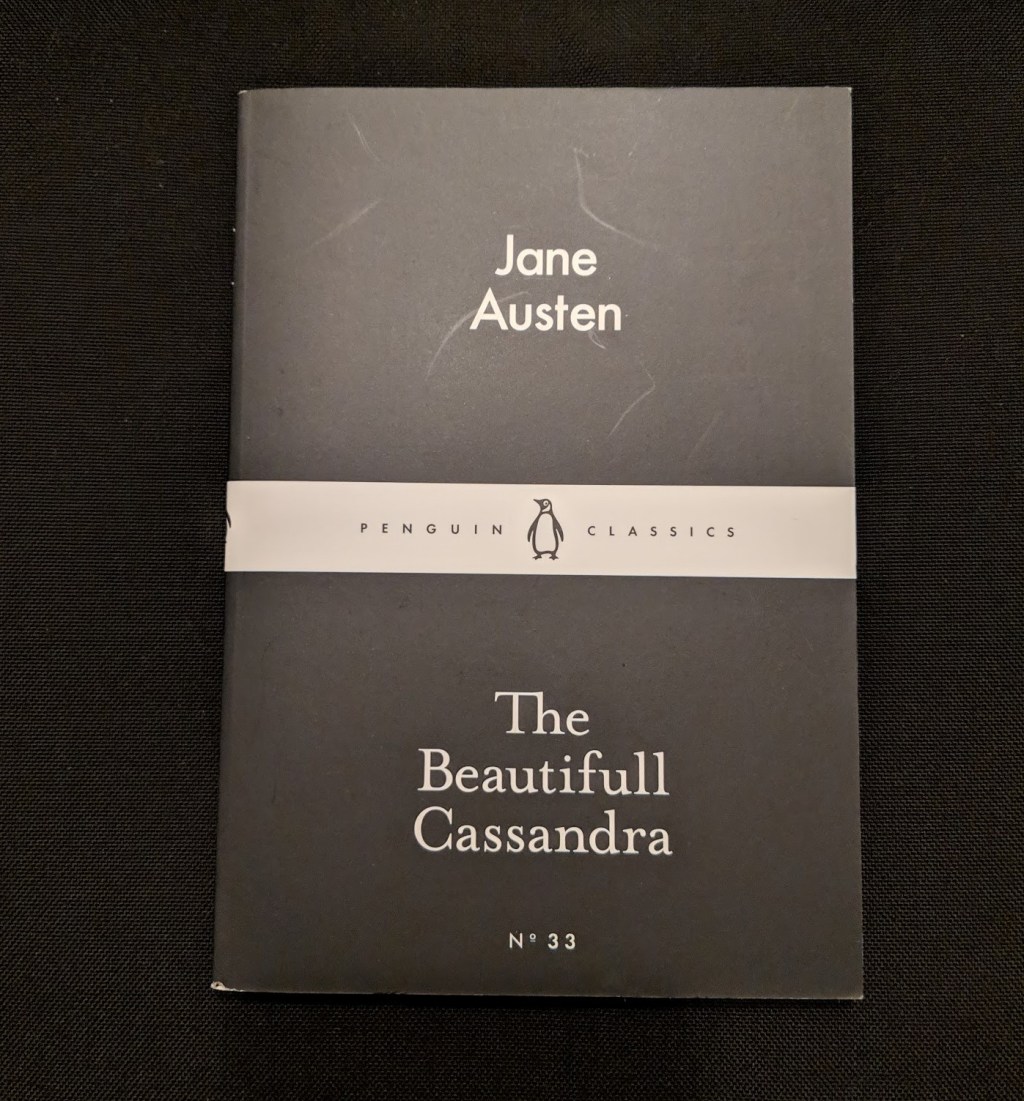
I’ve had this book on my shelf for quite a long time, but since I’m so close to the end of the year and not quite at my reading target for the year, it was time to finally read it – at only 55 pages I thought it would be perfect for catching up.
Unfortunately, even though it was Jane Austen who is by far my favourite author, I didn’t really find it that brilliant, I’m sorry to say. It’s a set of short stories (some shorter than others), but it seemed to lack the finesse of other Austen books – you can tell that it’s one of her earlier works.
Definitely darker than Pride and Prejudice, the stories include heavy drinking, murder, babies biting off their mother’s fingers – not what I would have expected!
I think it was partly because the stories were short, and partly because the stories were completely not what I expected, but I just couldn’t relate to the characters at all. One of the strongest parts of an Austen novel for me is that I can always imagine myself as friends with the main character, but definitely not here.
I supposed I can’t really hold it against her, since these are her earlier writings and she never intended them to be published – I do wonder what she’d think if she knew that they were now published to the world?
-
Matt Redman – 10,000 Reasons
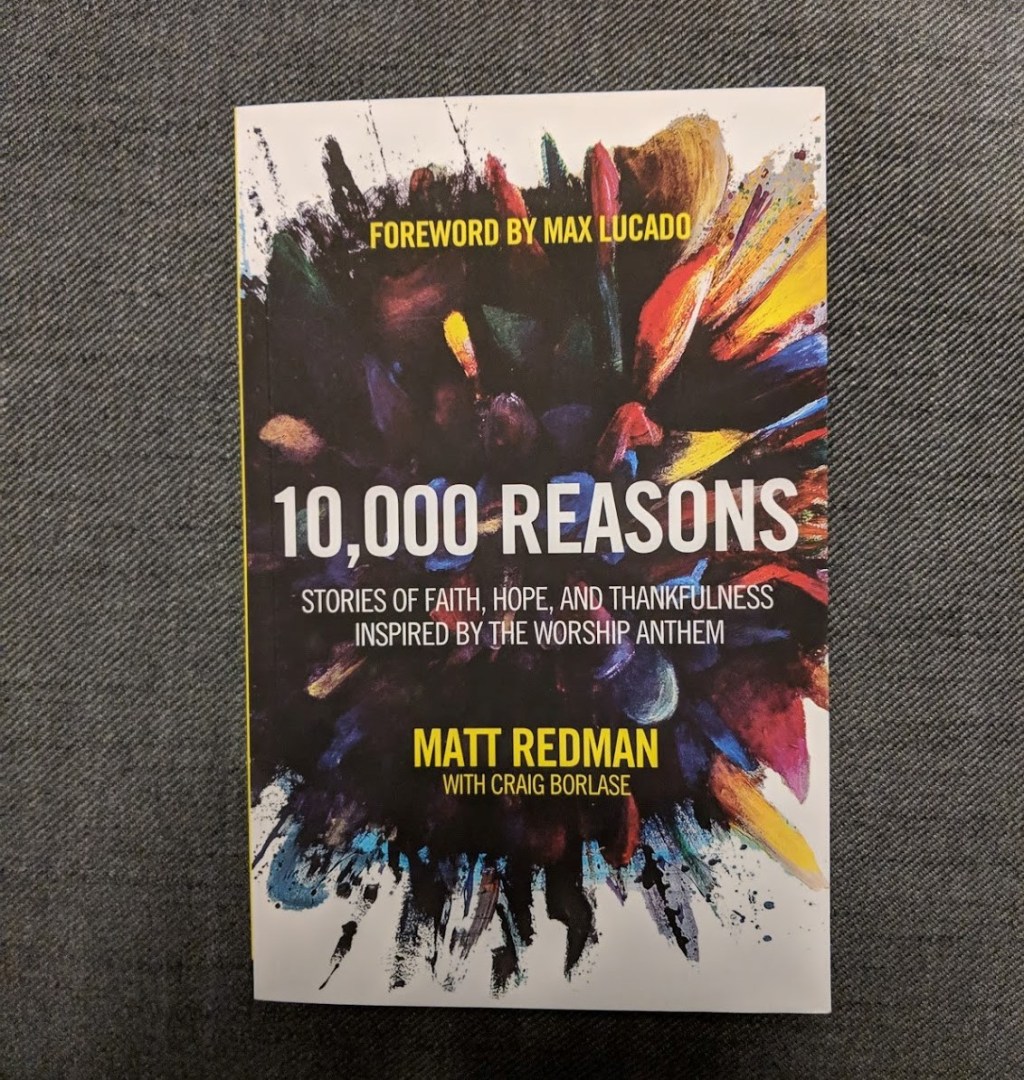
Starting with the story of Matt at the Grammy’s, you’d be forgiven for starting to think this book was going to be a popularity thing. But it rapidly becomes clear that Matt is not like that at all. The book is so unexpectedly humble, and more an homage to the power of worship in the most testing of times.
The book is a collection of people who have been impacted by what is arguably Matt’s most famous song: 10,000 Reasons. But more than that, it’s a story of how Matt came to create this song and so many others that are central to our worship today.
My conviction is that the greater the storms we face, the louder our songs must be. I hope this book will encourage you to raise your voice ever louder in the worship of Jesus Christ
Matt RedmanEarly on in the book, Matt talks about how his early years formed his devotion to worship in a strong way. Dealing with the suicide of his father, and then being abused as a teenager, it would have been very easy for him to go off the rails, but in Matt’s own words: “Sometimes in that season nothing else seemed to make sense. But somehow this place of worship always did”.
The whole book is full of stories of worship being front and center during the trials of people’s lives. Matt refers to what we need as the ‘Rhythm of worship’:
Rhythm of worship: breathing in God’s wonders and then breathing out in awe and praise.
Matt RedmanEach of the stories that Matt tells in the book is so intimate that I frequently found myself reading through the tears. I can only imagine how Matt felt writing this book, knowing that each of these intensely personal stories were centered around a song of his making. But Matt is very clear that he sees his songs as only a way of pointing people to God.
One of the stories Matt tells of his inspirations is the story of Horatio Spafford, who lost his four daughters when the ship they were travelling on collided with another ship and sank. As he travelled across the same sea to his wife who was one of the survivors, he penned this hymn:
When peace like a river, attendeth my way,
When sorrows like sea billows roll;
Whatever my lot, Thou hast taught me to know
It is well, it is well, with my soul.This song kept me going through some pretty tough times last year, and reading the circumstances around how it was written was heart-rending.
Perhaps we don’t really know what we’re made of until we encounter a little winter in our lives.
Matt RedmanAll the stories written in this book ‘remind us that God is not absent, even when we find ourselves in the darkest of nights’. The strength shown by the people Matt writes about is truly awe-inspiring. To leave this world singing songs of praises, so you can enter Heaven in the same way is a pretty fantastic thing to think about. Matt sums it up quite perfectly:
I often ponder that if we ourselves hear these stories and find them so moving, poignant, and powerful, can you imagine what they must mean to the heart of God? Can you even begin to conceive how He might respond as He sees His beloved children choosing to fix their eyes on Him and live out a life of trust and adoration during their most traumatic and testing moments?
Matt RedmanI can honestly say that I’ll never sing this song in the same way again, the book has truly affected me, and I can say that this song has a power that I’ve never fully realised before.
And on that day
When my strength is failing
The end draws near
And my time has come
Still my soul will
Sing Your praise unending
Ten thousand years
And then forevermore176 pages. Published in: 2016Read in Paperbackon 27-28th December 2018 -
Bryony Taylor – More TV Vicar?
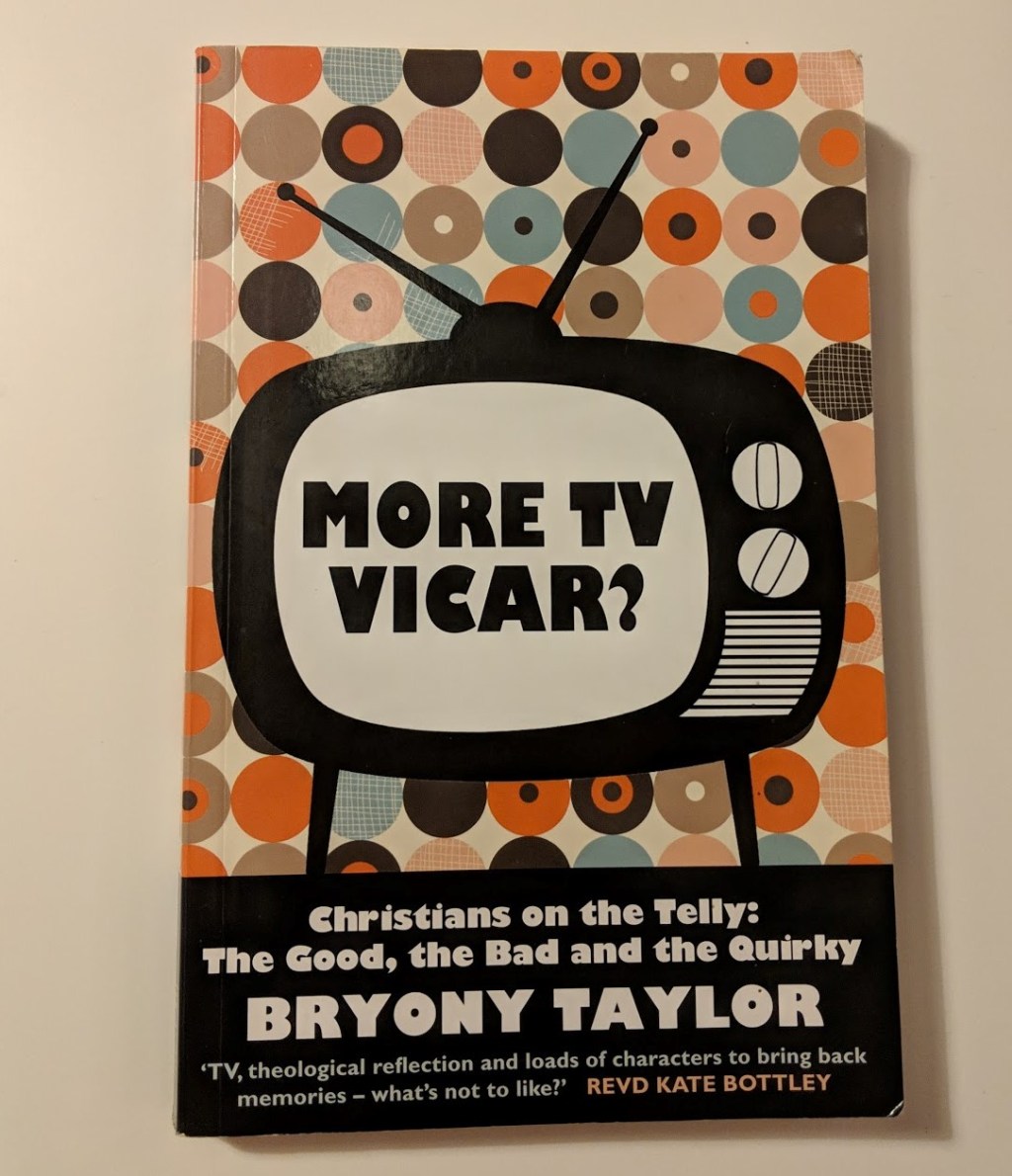
When I spotted this book on a trip to my favourite book shop (Barter Books in Alnwick), I knew I had to have it. Firstly, because I’ve heard Bryony’s name mentioned many times at our church as she was here before she went to train to be a vicar. And secondly, I’ve always found it interesting the ways that Christians are portrayed on TV, so I was really intrigued to see if I would agree.
The book is split into three sections: The Good, The Bad and The Quirky, with Bryony offering her reflections on each one. What surprised me was that The Bad, while not showing a ringing endorsement of what it’s like to be a Christian in 2018, were not necessarily bad in general. I guess it essentially boils down to ‘Vicars are people too’:
How do you feel about these realistic portrayals? Is it wrong to have a vicar character saying the ‘F’ word on television or is it refreshingly accurate?
If you are uncomfortable about these portrayals, ask yourself why. Is it because they are true? Is it because they present a version of a Christian that you don’t recognise to be orthodox?
Bryony TaylorSome of the characters referenced in the book were from shows I’ve never watched before, and after reading, I’m definitely adding some to my watch-list, like Rev and Bluestone 42. But my favourite section of the book was the section about comedy and its relationship with faith.
Since I started going to Church, I’ve definitely become more sensitive to religion-based jokes, and not just Christianity, but any religion. I agree with what was written in the book; ‘Mocking the evil things done in the name of religion or mocking comical clergy characters is fair game but once you get to the question of the actual beliefs held by Christians, there is potential for offence’. There are many things I hear now that I would previously have laughed at, but now I feel have crossed the line of what I find offensive.
In the book, Bryony gives examples of comedians who have gone too far, but also comedians who identify as atheists but use their religious upbringings as the basis for their jokes – these tend to be funnier (at least to me) as they are observational rather than derogatory.
So our response to these ‘bad’ portrayals? Let’s be British about it. If something offends you, good! It shows that you do care about what you believe. Be grateful that we live in a culture which encourages satire, encourages the challenge of misuse of power – it’s following in the tradition of Jesus Christ.
Bryony TaylorI think for me, the main thing that this book highlighted was not that there are so many ‘bad’ portrayals of Christians on TV nowadays, but that there are not so many good ones. As discussed in the book, you mainly see someone talk openly about their faith on TV only if it is somehow directly related to a plot point, not just as part of their every day lives. And if it miraculously is part of their every days lives, they’re likely to be over 70 and not at all representative of a growing part of the Church of England nowadays – I’d love to see some young Christian parts written into TV dramas/soaps that aren’t just the stereotype.
I’d definitely recommend this book, I read it in a day because I found the subject so fascinating, and the book was really well researched and presented.
160 pages. Published in: 2015Read in Paperbackon 26-27th December 2018 -
Krystal Sutherland – Our Chemical Hearts
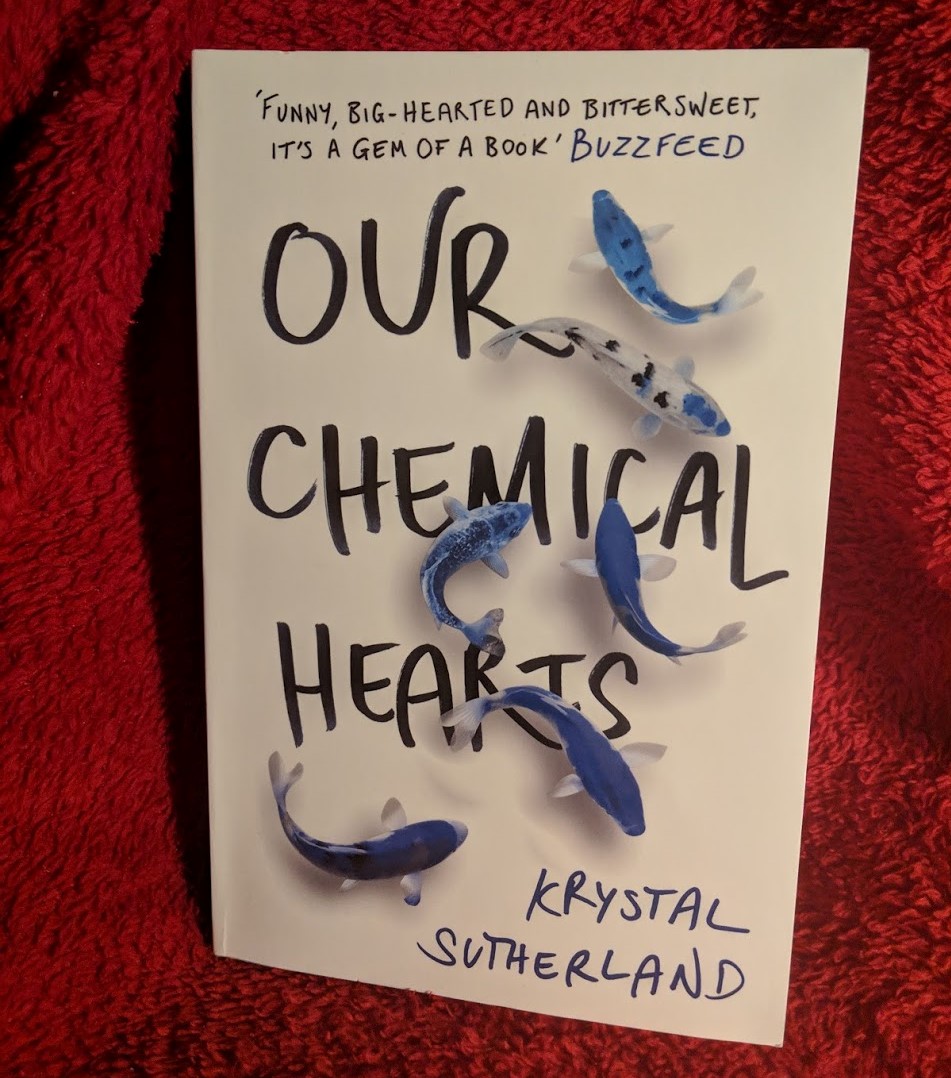
This book has been sitting on my shelf for 2 years, never quite making it to the top of my to-read list. But since I found myself with 6 days to read 6 books if I want to achieve my reading target of 60 books for this year, I picked this one up as it looked like a fairly easy and comparatively short read.
Unfortunately, I kind of feel like I wasted a whole day of reading on this book. While it kept me turning the pages and wanting to read further, it just all felt a bit futile. Henry, the main character, is in love with a girl who is clearly having mental health problems following the death of her previous boyfriend, but he continues pursuing her anyway, as he’s convinced it’s true love.
All I could think was that the poor girl needs friends and support, not some boy taking advantage of her. I mean, I guess ‘the boy’, Henry, actually seemed to be a fairly decent guy, even though he seemed to completely let his friends down all for the sake of Grace. Apparently, he’s worked his entire high school life to be editor of the school paper, and then when he gets it, he throws it all away.
I did find myself strangely drawn to Grace. It takes a long time for the story to unravel and for us to figure out why she acts the way she does, and that story did pull at my heart-strings. A lot of young adult books deal with death, but it’s usually slow and lingering (a la The Fault in Our Stars), not sudden and unexpected like this.
But as with Henry, I found myself wanting to shake her at times as her character could just be so infuriating. A little bit shallow for me. I think perhaps I would have preferred if we’d had some chapters from her point of view to delve deeper into her emotions.
Overall, I’ve only given this book 2/5, which is mainly for my enjoyment of the book rather than the quality of the writing or anything – judging by the reviews on Goodreads, there are many many people who find this book a lot more heart-rending than I did.
-
Milly Johnson – The Mother of All Christmases
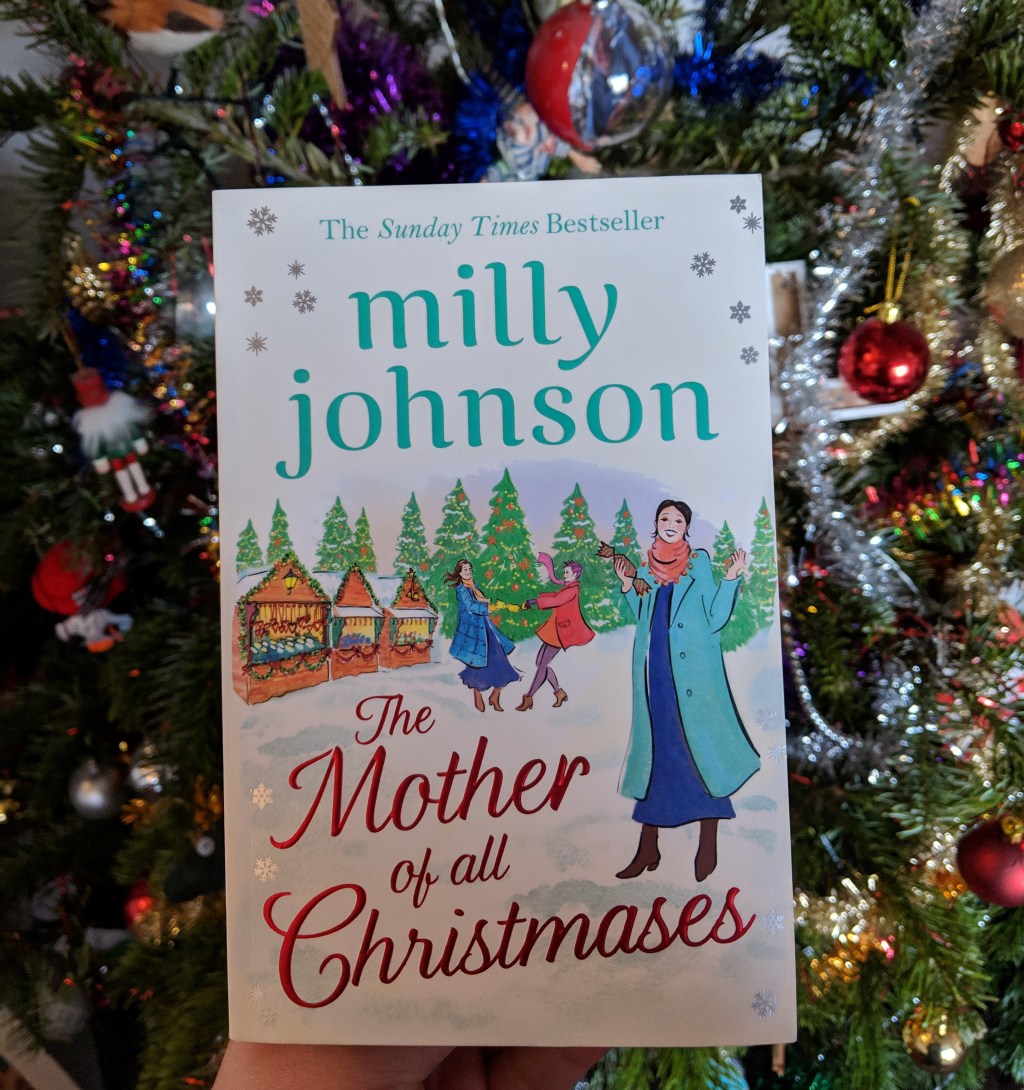
My love for Milly Johnson grows with every book I read. After queuing up for over an hour and a half in a Tesco in South Yorkshire to meet her and get this book signed, I made myself wait until closer to Christmas to read it, so I could feel properly festive!
The Yorkshire Pudding Club was the first book of Milly’s that I read (10 years ago now!), and this book is very closely related. In fact, the book’s working title was The Christmas Pudding Club. For that reason, it felt very familiar.
Another reason that this book felt familiar was that characters from so many previous booked cropped up in this one. It was really comforting to see the characters again, like old friends, and catch up on their lives, even if some of the glimpses were all too brief.
For a Christmas themed book, it wasn’t quite as ‘snowflakes and happiness’ as I had expected – there was a fair bit of grief and angst that pulled at my heartstrings and had me desperate to give the characters a hug – characters that felt like new friends from the moment we were introduced to them.
Dear, dear Palma was my book-best-friend, I could totally see myself being friends with her, her character was so sweet and thoughtful despite her background. But Annie and Eve were delightful too, even with their own non-perfect back stories, they still just seemed like lovely people to be around.
Of course, it wouldn’t be a Milly book without some romance, and I felt like this book had the perfect amount. Rooting for the characters right from the start, with no lying or cheating or anything, just perfect. But for me, the romance wasn’t the main focus of the book, it all boiled down to the beautiful blossoming friendship between Palma, Eve and Annie, and that was the best part for me, you can never underestimate the power of good friends.
528 pages. Published in: 2018Read in Paperbackon 17-19th December 2018 -
Emily Chang – Brotopia
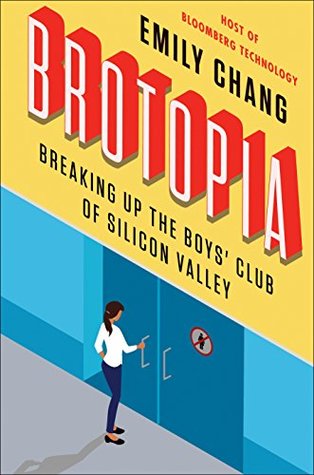
For the last few years, I’ve been reading a lot more about women in tech and the problems faced. I’m really lucky at the company I’m in now that gender is not an issue, but it’s still a really big problem in the industry and I think the only way we can change things is to know more about the situation.
This book, however, was not for me. Other books I’ve read in the past have been more about how women in tech can empower themselves towards equality, but this book seemed more like an exposé of bad behaviour in the silicion valley area. An important book, and definitely one worth reading, but all the naming and shaming felt too much for me.
I agree that naming and shaming is a good thing, but reading a whole book about it was really draining for me. Reading about isolated incidents in the news definitely draws attention to the problem and makes you think, but reading 300 pages of it made me start to lose hope that the industry can change.
Saying that, the book was well researched and really well written, but just not an easy read, hence why it took me so long to get to the end. I’m definitely craving some easier fiction now!
317 pages. Published in: 2018Read in Ebookon 6th November – 13th December 2018

Louise Douglas
(I've got no) Shelf Control…
 Louise Douglas