-
Mary Beard – Women & Power: A Manifesto
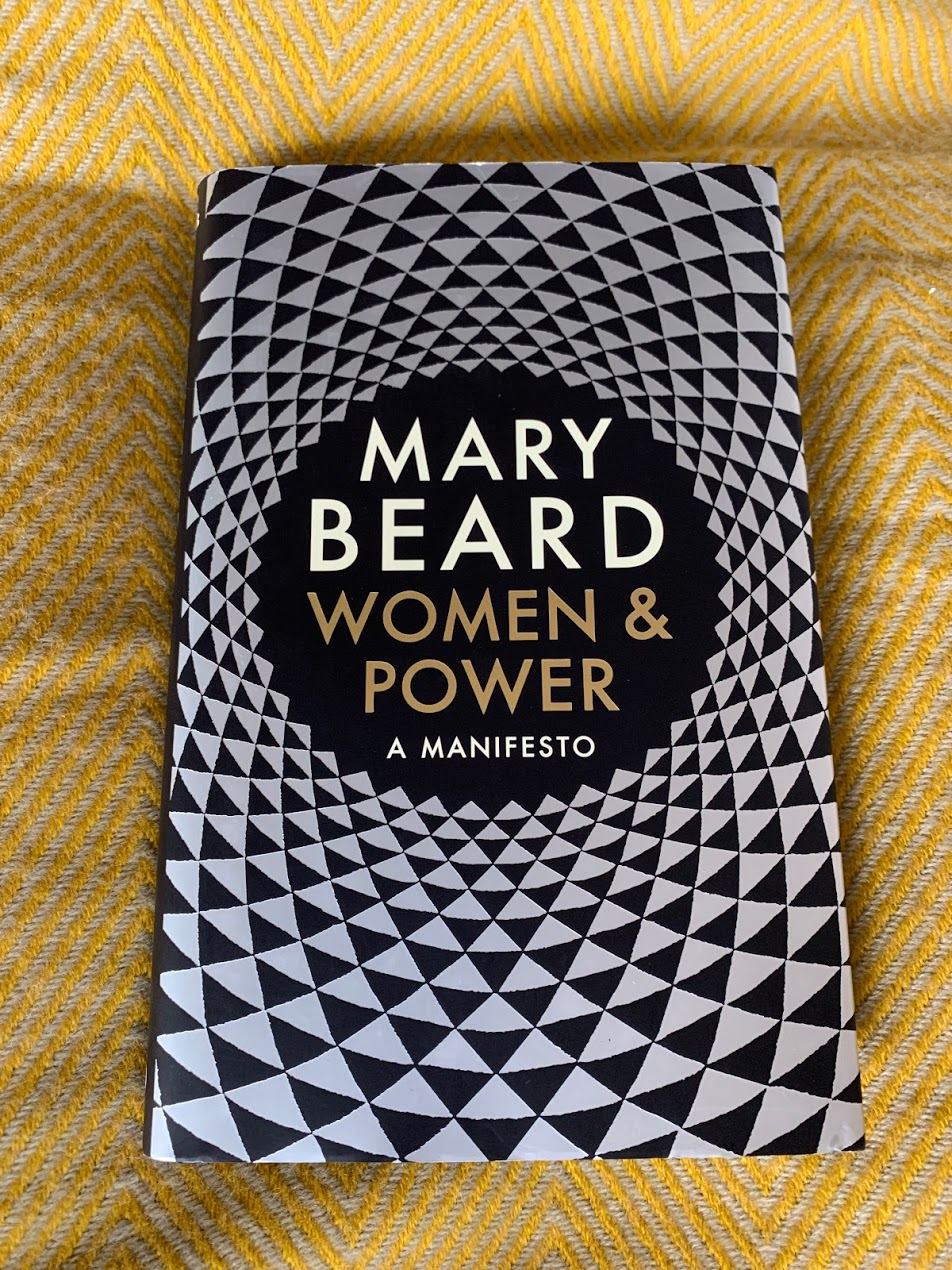
At the weekend, we went to Hardwick Hall where we learnt all about Bess of Hardwick – an incredible woman who faught against the patriachy and did some amazing things (Chatsworth House – yep, that was her building project too). They had a great video explaining the various ways that the history of this woman has been written to diminish her achievements, even down to the language used to portray her.
After we’d finished going round the hall (and after an obligatory slice of National Trust cake), we ended up in the gift shop, where they had a stand of ‘feminist’ books, curated around Bess’s influence. This one stood out to me initially because of the gorgeous cover, but when I turned it over and read the quote on the back, I knew I had to read it.
“You cannot easily fit women into a structure that is already coded as male; you have to change the structure.”
The book is a printing of two speeches given by Mary Beard in 2014 and 2017. I think calling it a ‘manifesto’ is probably going a bit too far, I think it could have done with a third section of ‘the future’, with ways that we can start to make changes. There were many connections made in what was written that I think could have been expanded on more in a third section, but I did find what I read very compelling.
With so many historical examples of women being quieted or excluded from power in ancient times, all the way through to current problems with Twitter and politics, the book was clearly very well researched and I couldn’t help but be drawn in by what was written.
It actually felt quite obvious for me that this had initially been a spoken piece, as the flow was very engaging and structured in such a way that it kept my focus the entire way through – although at around 100 pages for the whole book, it didn’t take a huge amount of time to read.
“But in every way, the shared metaphors we use of female access to power – ‘knocking on the door’, ‘storming the citadel’, ‘smashing the glass ceiling’, or just giving them a ‘leg up’ – underline female exteriority. Women in power are seen as breaking down barriers, or alternatively as taking something to which they are not quite entitled.”
I feel like I could quote so many sentences from this book, I spent most of my time reading it nodding along in agreement or feeling like she had put into words something that I had already been thinking but didn’t have the words to say. I think this book should be a must-read, and I’m definitely going to look to read more books from this author in the future!
-
Paula Gooder – Phoebe
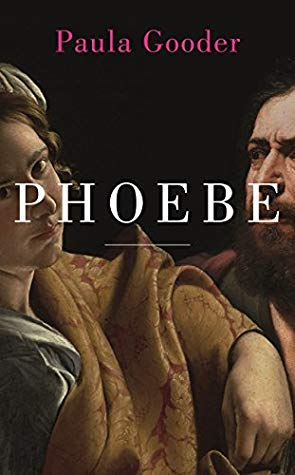
I picked this book up after seeing an advert for a talk with the author at Southwark Cathedral which just so happened to be while I was in London (this never happens!). I booked onto the event straight away, and the kindle version of the book was only 99p, so I dug straight in. Unfortunately, the event was cancelled for personal reasons, but I’m so glad that the event was what caused me to pick the book up in the first place, as it was fantastic.
“Reading requires imagination. As we read, we see in our mind’s eye the characters, the setting, the events as they unfold. This is why seeing a well-loved book in film or on the stage can be so disappointing; if the imagination of the director is different from our own it looks all wrong. “
I’ve never considered before reading a book like this, fiction but heavily based around facts from the Bible. The story (as you can probably guess) revolves around a character called Phoebe, who delivered one of Paul’s letters to Rome, and her reception and subsequent life in Rome.
It’s something I’ve never really thought of before – reading the Bible, it’s easy to just think about how it applies now, but I’ve not spent much time thinking about how the letter would have been received in those times. The book was also beautifully written, the phrasing, the timing, just everything about it made me smile and want to devour the book – take this from the very start:
“The resonant, almost melodic, voice of the reader had at last fallen silent. The final syllables of the letter seemed to hang for a few moments and then waft out into the humid air of the Roman summer evening. All around the garden a silence settled; a silence so profound that Phoebe heard, or at least thought she heard, a solitary leaf part company from the plant next to her and flutter slowly to the ground. Only then did she realise that she was holding her breath, and the odd tingling at the end of her nose suggested that it was some time since she had last remembered to breathe. “
I think I genuinely got chills when I read this for the first time, and many other parts like it, just beautiful descriptions that made me hold my breath while I was reading.
We read a lot of (imagined) back-story of Phoebe, bringing to life what it was like to live in those times, and especially for a woman in the Church. I will warn you, some of Phoebe’s story was heartbreaking and left me a little broken at times.
“Forgetting wasn’t an option. So instead I learnt to live one tiny step at a time. I also learnt that life is like a bubbling stream. It does just carry on, whether you want it to or not. Sometimes the best thing to do, even amid the greatest blackness and despair, is to surrender to its movement, to let it carry you along with it . . . and so I did. “
I really appreciated the personal relationships that unfolded throughout the book, it made it so engaging and brought real warmth to the characters. I also really appreciated the fact that the last section of the book was full of references to elements that the author had added to the story – it was so well researched, I was very impressed!
There were so many quotes that stood out to me while I was reading that I could probably have highlighted half my kindle, but some stuck out to me more than others.
“The message of Jesus is offensive.’ Junia shrugged. ‘For those who love success, he represents failure; for those who are comfortable, he brings disquiet; he topples those who know themselves to be right; he disturbs those who are pleased with themselves. I’d be more upset if they weren’t offended. I sometimes wonder what the Good News of Jesus will look like when it doesn’t upset people any more.’ “
Two thousand years on from when this was ‘written’, and this is possibly more true than ever – the message of Jesus is difficult, and we’ve seen this in our church recently when learning more about justice – it’s not something that sits comfortably with everyone, but the fact that it’s disquieting means we’re doing it right, we’re growing and learning about what being a follower of Jesus really means.
“What I’m suggesting is that with the Holy Spirit the most surprising, delightful things can happen. Prayer isn’t like giving in your order for hot food: submitted one moment and delivered the next. But prayer does place us in God’s presence. Prayer opens us up to see what God is already doing. Prayer invites God to be present at the heart of what we’re worried about. “
As I said before, the talk I was going to was cancelled, but the vicar at my church has said he’ll look into it and see if he can perhaps ask the author to come up north for another talk, which would be absolutely fantastic. I could tell when reading the book that the subject is something the author has real passion for, and I’d love to hear her talk.
Hopefully I’ve managed to make this book sound compelling and you’re already on your way to pick up a copy, and I’ll definitely be looking out for more books like this (fiction/non-fiction) in the future, really really great.
-
Andrew Pettegree – Brand Luther
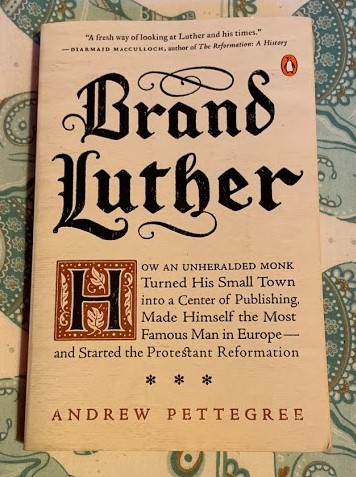
I started reading this book as a recommendation when we celebrated the 500th anniversary of the reformation in Church. As the reformation started in 1517, that probably makes it quite obvious that it’s taken me quite a while to read this!
The book was a fascinating take on the reformation, focused on the impact that Martin Luther had on the printing industry in Germany. Not too deep on theology, but I found the subject matter rather dry and scholarly so I didn’t find myself with a huge desire to pick up the book.
As such, it has sat on my bedside table being read 1 or 2 pages at a time. That means I can’t really give it a fair review as I probably didn’t give it the chance it deserved to be appreciated fully, but what I will say is that although it took me so long to read, I definitely felt like I learned a lot from reading it, and things that I didn’t learn from the other reformation history book I read.
If you’re interested in the history of the printing press more than the history of the reformation, I’d definitely recommend this book, but I think there are definitely (for me) more engaging books on the reformation.
383 pages. Published in: 2015Read in Paperbackon 5th February 2017 – 18th June 2019 -
Shari Low – With or Without You

An interesting premise, a story that starts with a life-changing decision. Then we split into two parts – one where Liv says Yes, and one where she says No. But is your life actually pre-destined to end up a certain way no matter what decisions you choose? That’s what is explored in this book.
I found the pacing a bit variable, at times I was fully engaged and devouring page after page, desperate to know what would happen next, but at other points it felt like a struggle to keep going.
I think part of the problem was that I just didn’t feel like I related to the main characters enough, and for me, that can be a deal-breaker as to how much I can engage with a story, so although I didn’t enjoy it 100%, that doesn’t mean that the book was bad, I can definitely see it being a lot more engaging for other people.
As for the premise of the book, it was definitely intriguing, and I liked how each part of the book tied up, and how as I was reading the second part of the book, I was finding myself forming opinions about what I wanted to happen based on what I’d read in the first half.
Like I say, I’d recommend the book, but it just wasn’t 100% my cup of tea.
438 pages. Published in: 2018Read in E-bookon 29th May – 16th June 2019 -
John Ousterhout – A Philosophy of Software Design
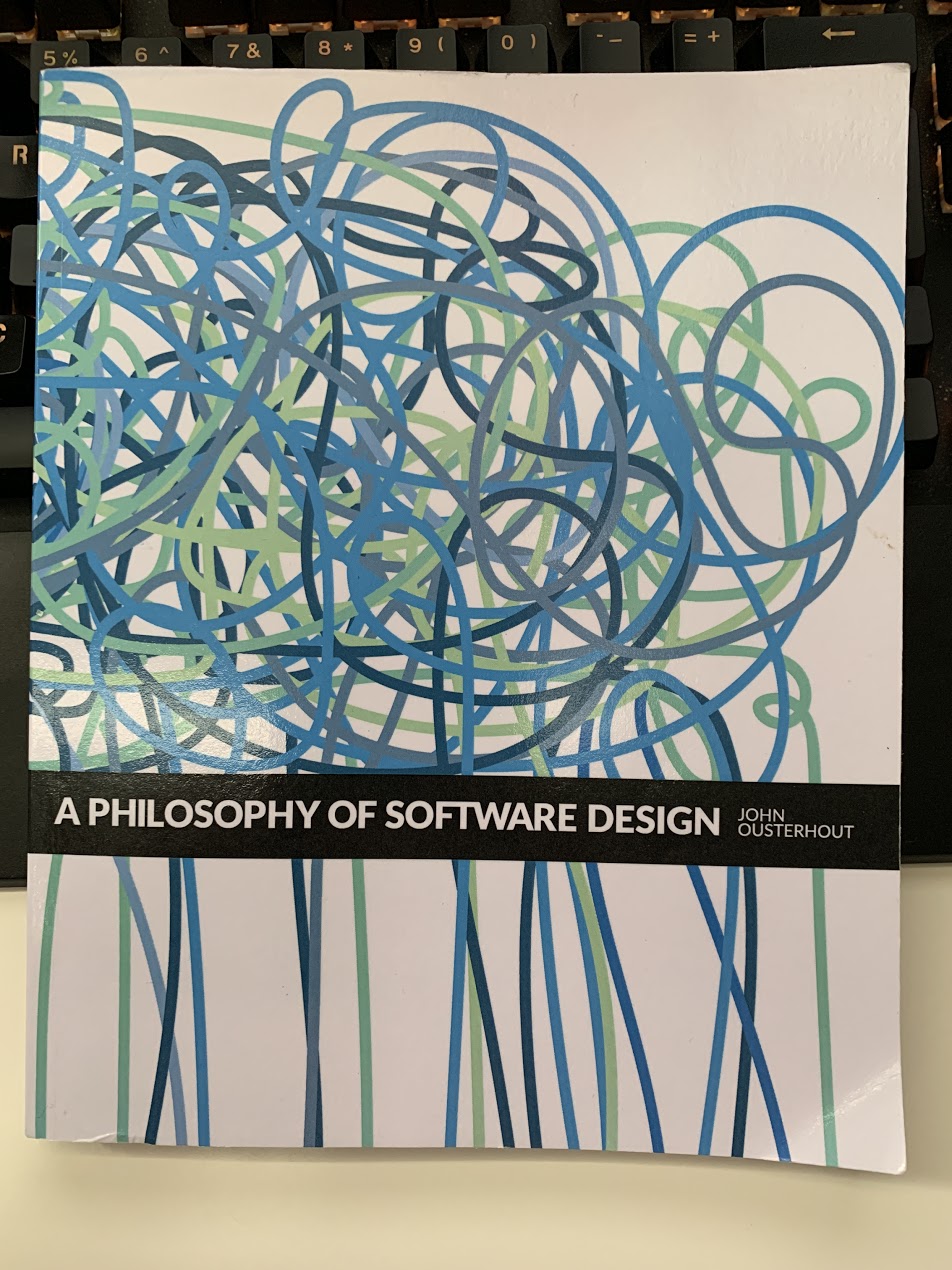
I think the fact that this book has taken me so long to read probably says all I need to say.
I had quite a few issues with this book, and found myself disagreeing with a lot of points that were made – I’m looking forward to doing a talk on this book to my team at work to see if they agree. I’m kind of glad I didn’t read this book a few years ago when I might have taken everything that was written as fact.
The first half of the book was a lot better than the second, but when it got to the section about comments, I found myself not wanting to read any more – it just seemed to completely violate everything I have previously read about clean code.
Ousterhout suggests that everything should have a comment – classes, variables, methods etc. We definitely don’t practice this in our company, it’s too easy for comments to get out of date, and your code should be easy to understand anyway – Ousterhout’s arguments for this are that your comments should be local to your code so any changes should be easy to spot in code review whether the comments are out of date – sorry, I’m just not going to buy into that.
I will say there were definitely positives, it wasn’t all bad, there were many parts of the book that made me think. Some things I’ve never considered before, and some things that I didn’t necessarily agree with, but I had to weigh up in my head before I could make a decision.
“Even if you are certain that there is only one reasonable approach, consider a second design anyway, no matter how bad you think it will be. It will be instructive to think about the weaknesses of that design and contrast them with the features of other designs.”
“When developing a module, look for opportunities to take a little bit of extra suffering upon yourself in order to reduce the suffering of your users.”
I could go on, but I think I’d just say that I probably wouldn’t really recommend this book. At least in our team, I think we have already established better working practices than those described in this book, so I don’t think it was really a big help for me to read it to be honest, but your mileage may vary.
-
Pete Greig – How to Pray
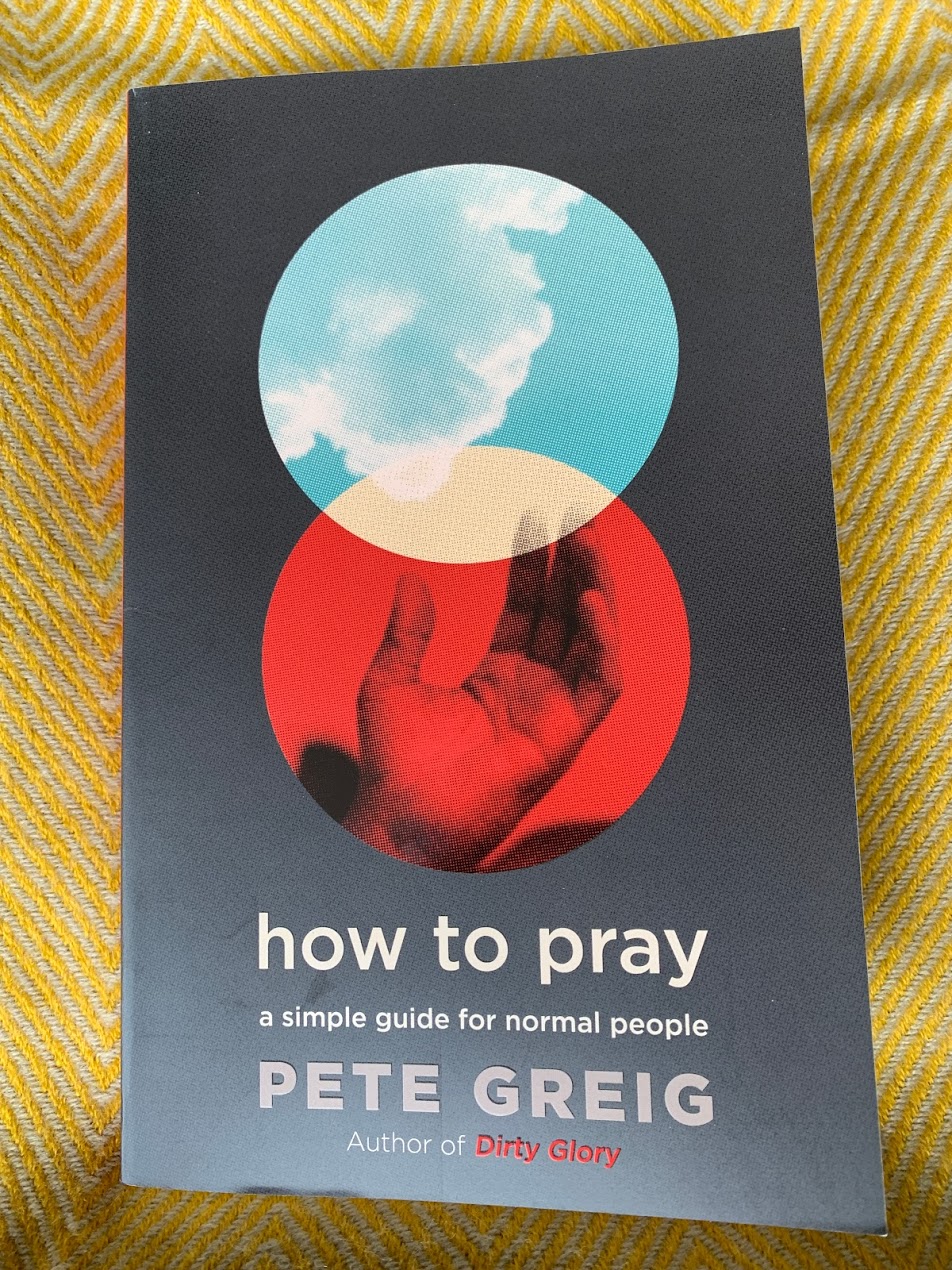
I pre-ordered this book when it first came out, but it’s been languishing in the middle of a rather large stack of books that I want to read so I hadn’t got around to it, until my vicar mentioned it as part of a sermon on prayer on Sunday and I decided that I’d move it to the top of the list.
Turns out, it was perfect reading for a rainy bank holiday and I found it really hard to put down – I ended up staying up til after midnight last night to finish it.
Split into handy sections, the book takes you through some techniques for prayer, and relates it all back to the Lord’s prayer – the way Jesus taught his disciples to pray when they asked him how they should.
I do love an acronym, and the book was split into 4 areas:
Pause: slowing and centering.
Rejoice: adoration and thanksgiving.
Ask: petition, intercession and perseverance.
Yield: contemplation, listening, confession and spiritual warfare.“When you pray about the small things in life, you get to live with greater gratitude.”
The book was eye-opening for me in a manner of ways, some things that I should have noticed before, but some that I have never thought of. For example the practice of stilling yourself before prayer doesn’t have to involve sitting down in a quiet space – you can also still your mind in activity, like going for a walk or a cycle and allowing your mind to be stilled through being active.
“After decades of night-and-day prayer, I have come to believe that 99 per cent of it is just showing up, making the effort to become consciously present to the God who is constantly present to us.”
Prayer doesn’t always have to be you talking at God, just being in his presence and listening for what he has to say to you is enough. Sometimes just reading the Bible and meditating on what you are reading is a form of prayer, where God can talk to you in profound ways.
“One of the reasons that it’s important to spend time regularly in the Bible, and especially to memorise verses of Scripture, is that it sharpens your sword. When God speaks to you through his word, it’s not just to bring solace to your soul and light to your path, but to arm you with the truth you desperately need for the fight of your life.”
One of the parts of the book that stood out to me most was this part about suffering and prayers that seem to be unanswered. It’s something that we talked about recently in my church Life Group, and I felt that this summed it up really well:
“Life sometimes hurts like hell but I’ve discovered that deleting God from the equation doesn’t actually help. It merely removes all meaning and morality from the mess, and all real hope from the future. And so I’m sort of stuck with God, even when I don’t understand him. Even when I don’t completely like him. Turns out he is all I’ve got. And maybe this is where hallowing actually begins.”
I think it all boils down to this:
“The one who numbers every hair on our heads and stores every tear that we cry, also remembers every prayer that we pray. This is a mind-blowing truth.”
Keep it simple.
Keep it real.
Keep it upWithout giving away the whole book, I think I should probably stop here, but I would really recommend this book to anyone looking to start or kick-start a prayer habit.
-
Giovanna Fletcher – Dream a Little Dream
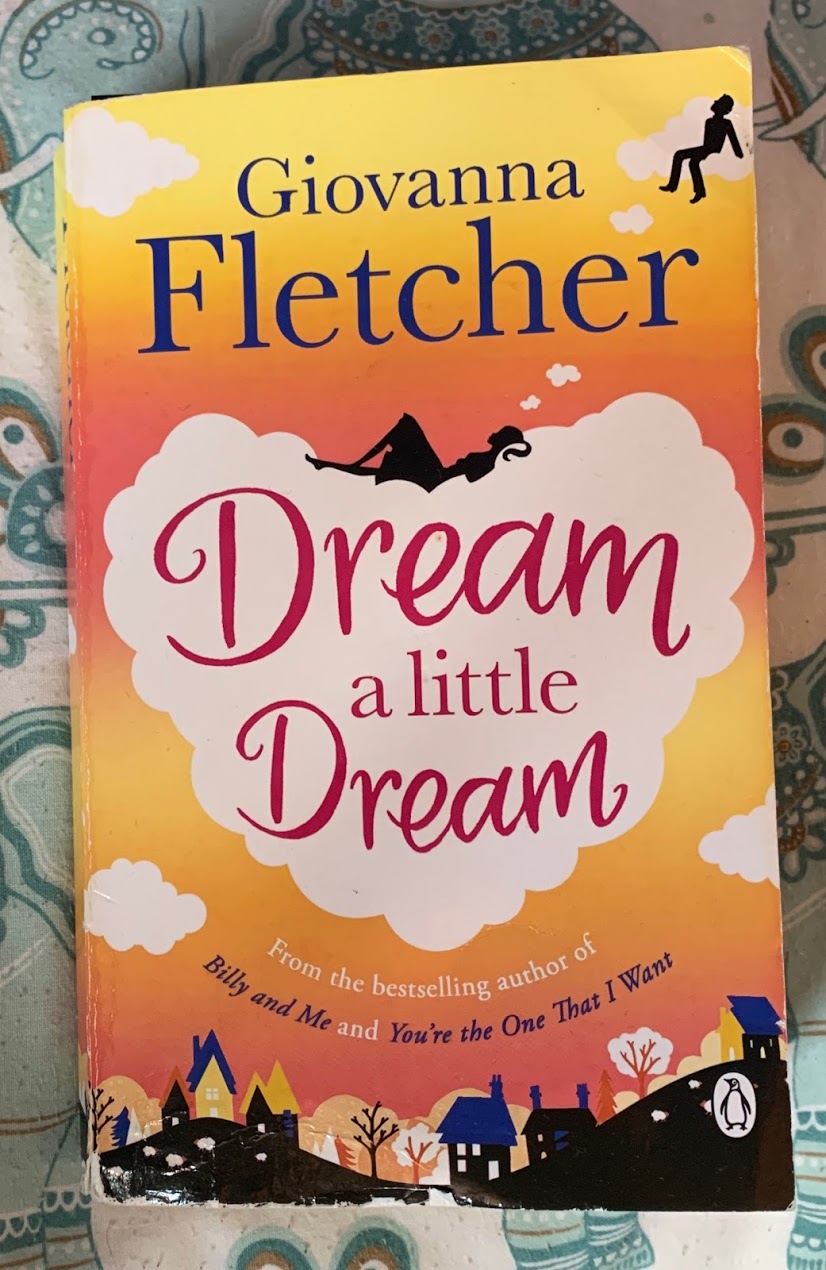
Giovanna Fletcher is one of my favourite people to follow on the internet, and I have always loved her books, but if I’m honest, I found this one really hard to get into. I think I was probably about half way through before I felt like the pace picked up enough for me to be completely invested in Sarah’s life, and there were a couple of times when I wasn’t convinced I was going to finish reading.
But the second half of the book mostly redeemed the first half, keeping me gripped and by the end I couldn’t wait to find out what would happen between Sarah and Brett.
I found the dream segments between each chapter increasingly bonkers, but perfect for conveying the surrealness of what we usually dream – I found myself laughing out loud many times at the ridiculous situations that dream Sarah found herself in.
It also made me smile that the book was set in and around my old office in London, it was nice to recognise some of the places that Sarah and her friends were going.
Now don’t get me wrong, the book wasn’t all light and airy – without giving away any spoilers, there were certain sections of the book that left me wanting to cry, and that were written with sensitivity and heart. But mainly, the book made me smile.
When Brett, the guy that Sarah has been dreaming about, suddenly comes back into her life, it’s amusing to see her struggle with the differences between dream-Brett and real-Brett. But whether her dreams can ever match up to reality is another matter.
One of my main problems was that the main character, Sarah, was a complete and utter pushover – she was dumped by her ex, but still hangs out with him all the time as he is part of her friendship group – she doesn’t want him to feel left out and invites him to everything, even though it breaks her heart all over again – especially when he’s parading round Perfect Lexie – the girl he left her for.
I think I would have been more invested from the start if Sarah had been a bit more spunky and self-confident, maybe then she wouldn’t have been walked all over in her work-life either.
All in all, I thought the book was good, but it wasn’t a book that I’ll be raving about really. But I’ve read other books by Giovanna Fletcher that I loved more, so I’ll definitely be on the lookout for more!
-
Gary A. Haugen – Good News About Injustice
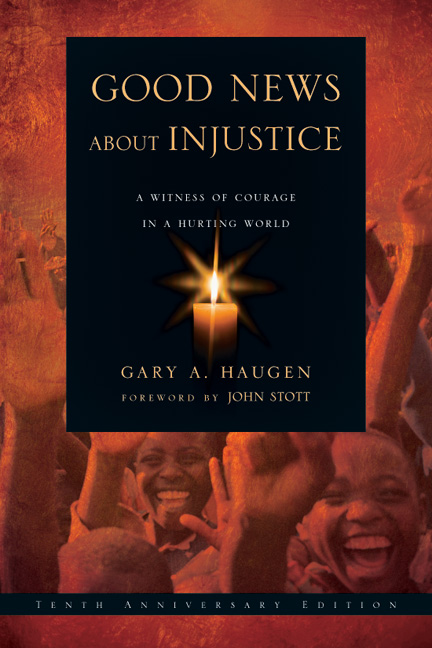
I seem to usually start a book review saying whether I enjoyed the book or not, and I can’t in all honesty say that I ‘enjoyed’ this book, but it was necessary and eye-opening and quite frankly a must-read.
So the fact that I didn’t ‘enjoy’ it should not put you off from reading – I give this book 5/5 stars and would recommend it to anyone with an interest in a Christian perspective of injustice, I would potentially go so far as to say it should be necessary reading – it really helped me to recognise that our lives as Christians are destined for the purpose of freeing people from oppression.
Recommended by our vicar as our church is now partnered with IJM (International Justice Mission – the author is the founder and CEO), I wanted to read this book to find out some more about why this partnership is so vital.
“Because only a handful of Christians are cognizant of the crisis of modern-day slavery, little is accomplished.”
I’m not going to lie, it has taken me a couple of months to read, some parts were so brutal that I had to take a step back from reading for a little while and come back to it. And the thing that horrified me most about that was that I was just reading about it but people lived through it – everything written in this book comes from a real situtation, and situations like those we read about are still happening all over the world.
The author was sent to Rwanda by the UN in the aftermath of the genocide, and that changed the course of his life. I had of course heard of the Rwandan genocide, but I had never truly appreciated the scale and the horror of it, and quite honestly, I sat on the train crying while reading this part of the book, and many others.
I made so many highlights on my kindle as I read this book that I can’t share them all as you might as well just read the book (which I would highly recommend), but I’ll share the quotes that stood out most to me and why and hopefully that will give you a glimpse into the book and make you want to go get it for yourself.
“This is the essence of Edmund Burke’s conviction about human history: ‘All that is necessary for the triumph of evil is for good men to do nothing’.”
It seems to me that sometimes the truth about what is going on in the world can paralyze us into inaction; the ‘bad’ seems so big that we think that there’s no way we can possibly stop it, so we do nothing. But as Haugen says in the book:
“The good samaritan was good not because he was able to meet all of the hurting man’s needs but because he had mercy on the man and cared for him, and then referred him to someone else who could help him.”
Just because we can’t fix everything, we can still help. Whether that is by working directly with those affected, contributing financially to those who do, or just by talking about the injustices of the world so that people are aware, there is a role we can all play in restoring justice to a broken world.
“The biblical mandate to seek justice and rescue the oppressed is an integral and magnificent theme of the Christian heritage.”
…
“Moreover, we can be restored to the conviction that God is prepared to use us to ‘seek justice, rescue the opressed, defend the orphan, plead for the widow‘ (Isaiah 1:17).”
We can’t really hide from the fact our God is a God of justice and that he will use us to intervene for the opressed and set them free – “For even as we celebrate the coming of Christ into the world, in Scripture we are powerfully reminded of the kind of world into which he has come.” We know that we live in a broken and fractured world, but “from the word of God we learn that God’s plan for seeking justice in the world is to use his people to work acts of love and rescue. “
In essence, the “Good News About Injustice” is that we don’t have to just sit and wait for God to come and free the world from oppression, and neither are we on our own to fix the problems ourselves. We are called to work in partnership with God and go where he sends us to pray, give, tell, or work in the places and situations where we are needed and pursue a biblical mandate of setting the oppressed free.
“If we had to see it and hear it every day like our God does, we would hate it too.”
“Hope displaces hopelessness.”
“God is in the business of using the unlikely to perform the holy.”
I’ll finish with a link to the IJM website if you have read this review and want to find out more about the fantastic work that they do – we’ve been lucky to have had them come and talk to us a couple of times at our church and their work is vital.
273 pages. Published in: 1999Read in E-bookon 1st February-24th May 2019 -
Onjali Q. Rauf – The Boy at the Back of the Class
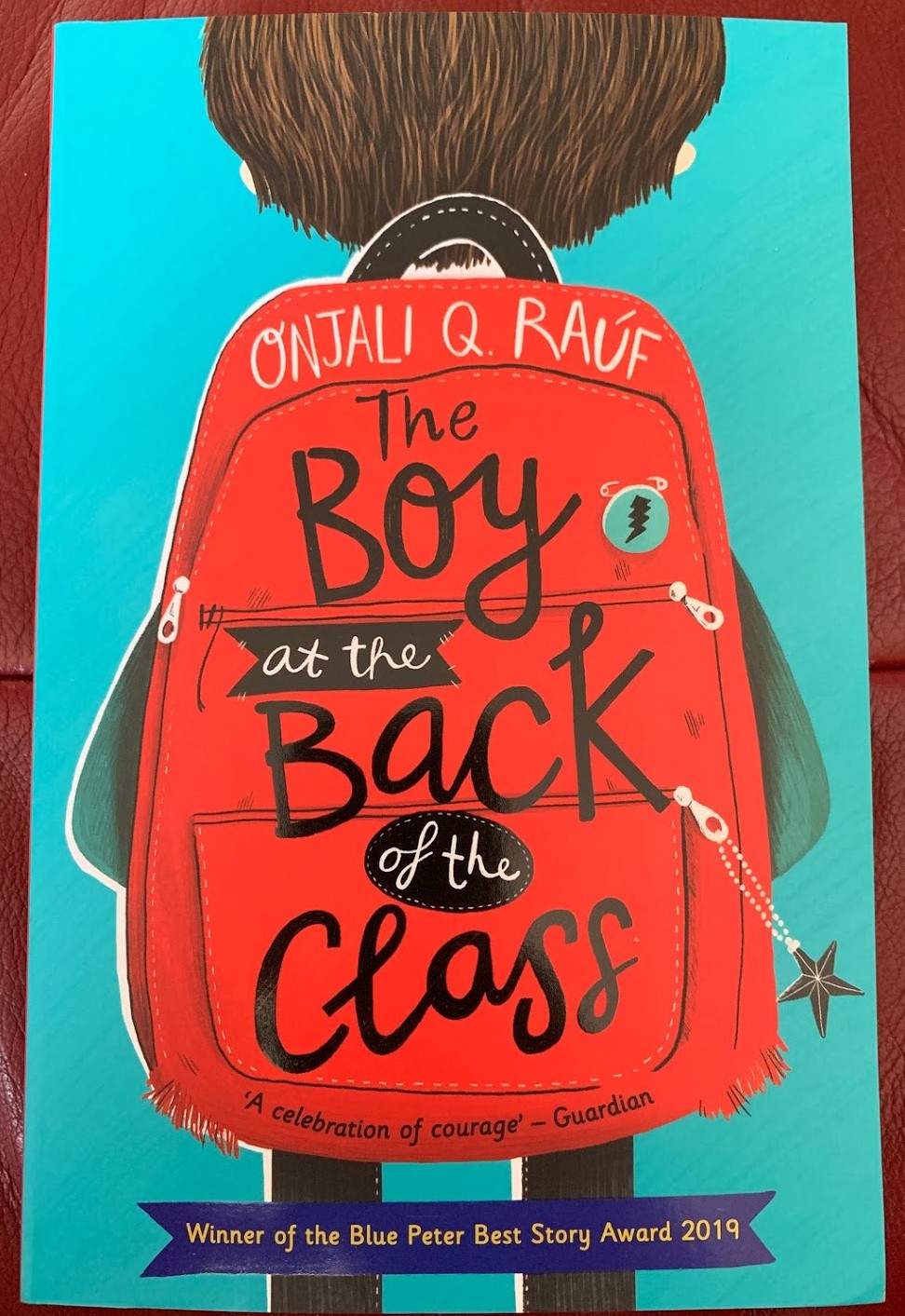
A warm, engaging and inspiring look at an all too relevant topic, I would recommend this book to everyone, but particularly as a very engaging and relatable way to introduce the topic of the refugee crisis to young children.
I first heard of this book when it started winning awards, namely the Waterstones Children’s Book Prize 2019, and although it’s a children’s book, it hits with a big punch.
Written from the perspective of a 10 year old (who I spent most of the book assuming was a a boy, but I think was a girl), and their experience when a new boy starts at their school. Ahmet is quiet and unusual and not everyone in the class feels like they need to treat him with respect.
But our protagonist and her friends decide that they want Ahmet to be their friend, and they’re willing to go to great lengths to make sure that he feels welcome and at home – I loved their first attempts of putting stickers on fruit – that really brought a smile to my face!
I wasn’t expecting this book to hit quite as hard as it did, but I think the naivety and complete innocence from the young perspective made it all seem so obvious. It makes you wonder how some people can be so prejudiced against the obvious struggles of other humans genuinely coming here to claim asylum from such horrible situations.
When Ahmet read out his life story in front of the class, I actually got a tear in my eye, thinking of how real that story is for so many people. And while we can’t all go to the lengths that the kids go to in this book, we can all do things that will make a difference.
Definitely a book that will make you think, go out and pick it up now!
-
Paige Toon – The Last Piece of My Heart
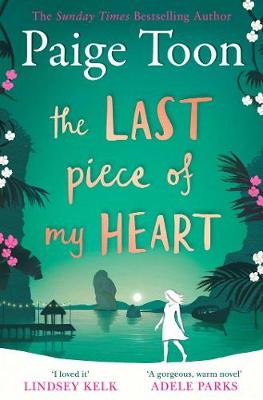
Another E-book by an author that I’ve heard of but never read before, picked up because the e-book is currently free on Amazon, and the perfect book for a long train ride home.
However, I did have extremely mixed feelings about the book, which you might understand as you hear more.
In the book, we meet Bridget, a successful travel writer, who is currently travelling around the world meeting up with past boyfriends to ask them for the piece of her heart back. She has a theory that she’s given a piece of her heart to every boyfriend she’s been with, and she won’t be happy in her current relationship until she tracks them all down – and what a perfect topic for her blog too!
So she has left her current boyfriend Elliot in Australia while she goes on this mission (with his full backing), and she’s pretty sure that he will propose when she returns.
But while she’s in the UK, she’s offered a chance she can’t turn down. An author called Nicole Dupre died, leaving behind a bestselling novel and an unfinished sequel, and her family have decided they want someone to ghost-write the end of the sequel to bring it to a conclusion for her fans.
So Bridget ends up moving to Cornwall for 2 months, to work in the home-office of Nicole Dupre. But obviously, being a home office, it means she ends up spending a lot of time with Nicole’s grieving husband Charlie and their small child April.
Charlie seems very distant at first (I mean, he’s just lost his wife and has been solely responsible for their baby girl since she was 5 weeks old, so I’m not surprised), but slowly, Bridget manages to draw him out of his shell.
And then it started to get a bit weird for me. Charlie is clearly grieiving and not coping very well with the loss of his wife, but you can see Bridget quite obviously falling in love with him, and as he starts to warm to her too, you know where the ending is going.
Don’t get me wrong, it was written very sensitively, and the turmoil of emotions that Charlie goes through were very thoughtfully written, but it did make me a bit on edge that it was all happening so quickly, and it seemed like Bridget was a little bit manipulative to be honest.
But over all that [spoiler alert], I did enjoy the happy ending. Charlie deserved it, and it did seem like Bridget was the right person for him to end up with after she had cared for him and April so well, it just set me on edge a little, that’s all.

Louise Douglas
(I've got no) Shelf Control…
 Louise Douglas